

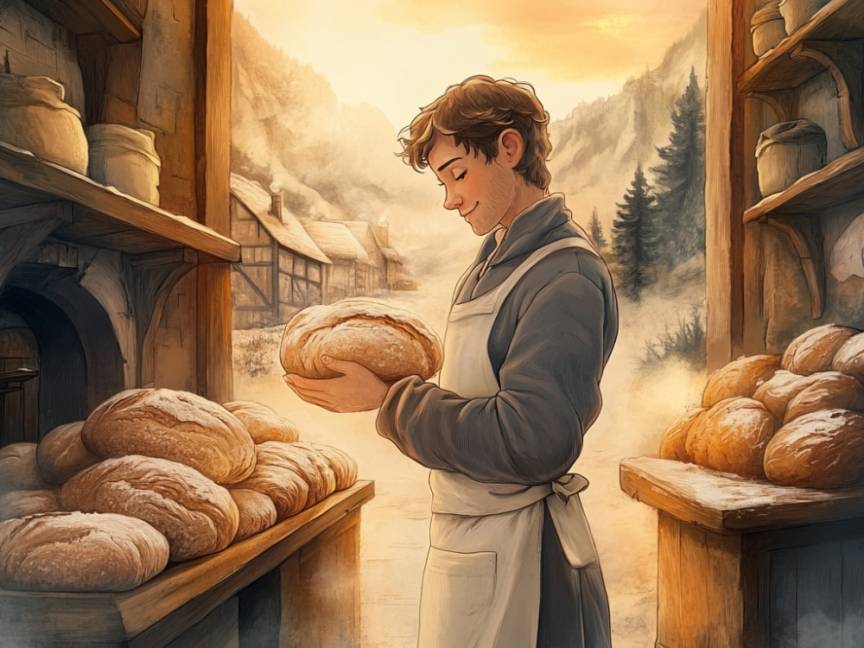



In a quiet little village nestled between rolling green mountains, there lived a baker named Barnaby.
Barnaby didn’t have much money, but he had a heart of gold. Every morning before the sun peeked over the hills, he was already awake, kneading dough and firing up his oven until the smell of fresh, warm bread drifted through the entire village. The villagers adored him, not just because his bread was delicious, but because he always saved a few loaves to give to those who had nothing to eat.
One sunny morning, Barnaby decided to hike into the forest to pick wild berries. He wanted to add a fresh, sweet tang to his morning buns. As he walked through the woods, enjoying the sunlight filtering through the leaves and the birds singing in the branches, he spotted something unusual.
Sitting against the trunk of a giant oak tree was an old woman in tattered gray clothes. She looked pale, frail, and very weak.
Barnaby rushed over to her. "Ma'am, are you all right?" he asked gently. "Do you need help?"
The old woman looked up, a flicker of gratitude in her tired eyes. "Young man," she whispered, her voice raspy, "I haven't eaten in a very long time. Could you spare a scrap of food?"
Without a second thought, Barnaby pulled his own lunch—a fresh loaf of bread—from his basket and handed it to her, along with his canteen of water. The old woman ate slowly, and with every bite, color returned to her cheeks.
When she finished, she looked at Barnaby with a deep, piercing gaze. "Thank you, young man. I have no money to repay you, but please, take this sack of flour."
She pulled a small burlap sack from her rags. Inside, the flour didn't look like ordinary white dust—it sparkled and shimmered in the light.
"This is magic flour," she explained. "Every loaf of bread you bake with this will grant one wish. But remember: the magic draws its power from your heart. If you let greed take over, the magic will bring only misfortune."
Barnaby walked home, half-believing, half-doubting. He decided to test it. He kneaded the dough, placed it in the oven, and made a silent wish: "I wish to sell more bread tomorrow, so I have enough to share with even more neighbors."
The next day, his shop was packed! Customers lined up around the block. Barnaby was overjoyed, but he didn't forget his promise—he used his extra earnings to help the poorest families in the village.
But as time went on, and wish after wish came true, Barnaby’s heart began to change.
He started wishing for bigger things. First, he wished for a grander house, and then for fame. No longer satisfied with simple comforts, he wanted to be the richest, most important man in the land. Finally, consumed by ambition, he prepared some dough and made a truly selfish wish: "I wish to be the most powerful man in the entire kingdom!"
The moment he pulled the finished loaf from the oven, the sky turned pitch-black. Thunder crashed, and the wind howled. The magic had turned against him. In an instant, Barnaby’s riches vanished. His grand mansion crumbled into dust, his lavish gardens withered, and his fair-weather friends abandoned him.
He was left standing alone in the ruins, his heart heavy with regret and despair.
Barnaby finally understood the old woman's warning: greed comes with a terrible price. Determined to make things right, he trudged back into the forest, searching for the mysterious stranger. After hours of walking, he found her sitting under the same giant oak tree.
Barnaby fell to his knees. "I’m so sorry," he wept. "I was blinded by greed, and I forgot who I was. Please, tell me how to fix this."
The old woman gently placed a hand on his head. "True magic isn't in the flour, Barnaby. It is in your spirit. When you forgot kindness, the magic turned dark. I will give you one last chance. Bake one final loaf with the dust that remains, and make a wish from the heart."
Barnaby hurried back to the ruins of his bakery. He swept up the last shimmering grains of flour from his torn sack, kneaded a small ball of dough, and placed it among the fading embers of his oven. As it baked, Barnaby closed his eyes. He didn't think about gold, or power, or fame. He remembered the joy of simply baking bread for his neighbors.
"I wish for everything to go back to the way it was," he whispered. "I want to start over and cherish the simple things I have."
When he opened his eyes, he was back in his small, humble cottage. He was poor again, but his heart felt lighter and more peaceful than it had in months.
From that day on, Barnaby never relied on magic flour again. He worked with his own two hands and his own warm heart. He continued to bake the best bread in the valley, always sharing it with those in need. And though he never became a king or a millionaire, Barnaby became the most respected man in the village—not for what he owned, but for who he was.
Deep inside a forest filled with towering green trees and brightly colored wildflowers lived an adorable bunny named...

Once upon a time, a little girl named Lily lived near the base of a giant, snowy mountain. At the very peak of this...

Once upon a time, there was a little girl named Hailey who loved to read. She had read countless books and learned...
Once upon a time, deep in a lush, green forest, lived a lion named Mr. Leo. Mr. Leo was big and strong. He strutted...
Once upon a time, there was a little turtle who always took his sweet time getting anywhere. Because he walked so...

In the year 2080, the world hummed with a special kind of magic—not of wizards and wands, but of science and...
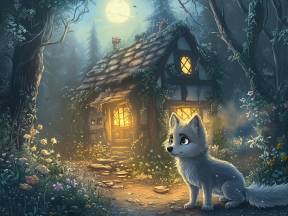
Deep in the heart of a lush, green forest lived a very curious Little Wolf. He loved exploring every nook and cranny...
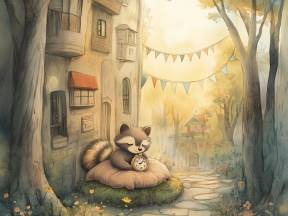
Once upon a time, in a lush, green forest, lived Little Raccoon. He was wonderfully chubby, with big, bright eyes...
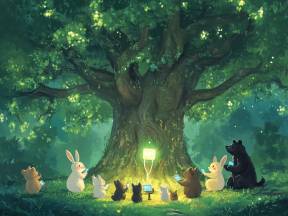
Once upon a time, nestled deep within a lush, emerald forest, lay a bustling animal village. It was a lively home to...

Once upon a time, in a lively, bustling forest, there was a wonderful Animal School where all the little woodland...
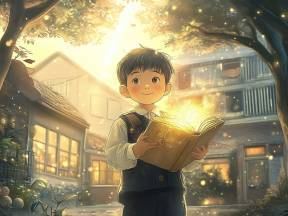
In a lush, green town lived an eight-year-old boy named Gale. Summer vacation was just around the corner. One...
Deep inside a magical place called Rumble-Bumble Valley, there was a very busy, very loud town called Monster...

Once upon a time, in a cozy place called Monster Village, there lived a sweet monster named Bobby. He was pleasantly...

Right next to the sparkling blue ocean stood a little school called Ocean Breeze Elementary. Every day during class...
Deep inside a forest filled with towering green trees and brightly colored wildflowers lived an adorable bunny named...
On a breezy Saturday evening, just as the streetlights began to flicker on, Dad took his twelve-year-old daughter...

 Sign in with Google